Necklace Layering for Necklines Made Elegant
A beautifully layered neckline begins before the jewellery box. The cut of a dress, blouse or knit determines the space available for each chain, the point at which a pendant sits, and whether the overall effect feels deliberately composed. Necklace layering for necklines is less about adding more pieces and more about creating proportion: a considered arrangement that lets every detail be seen.
Fine jewellery is particularly suited to this approach. A slim gold chain can bring light to an open collarbone, while a diamond pendant gives a simple neckline a focal point. The most enduring combinations feel personal rather than overly matched, bringing together treasured pieces in different lengths, textures and scales.
Start with the neckline, not the necklace
Before selecting your chains, look at the shape made by the fabric around your neck and shoulders. A neckline creates a visual frame. Jewellery should either follow that frame or sit confidently within the open space it leaves behind.
The practical question is where each chain will rest once you move. A pendant that appears perfectly placed while standing still may disappear beneath a neckline when you sit, while several chains of similar lengths can knot together and lose their definition. Leave enough difference between lengths for each piece to retain its own presence.
As a guide, begin with two necklaces rather than three. Choose a fine, closer-fitting chain and a second piece that falls lower, then assess the balance against the outfit. A third layer is most effective when the neckline offers enough room and the individual pieces have distinct roles.
Necklace layering for necklines by shape
V-necklines
A V-neck naturally invites jewellery that mirrors its line. A fine chain at the collarbone followed by a pendant or drop that sits within the V creates an elegant, lengthening effect. Avoid placing a large, round pendant directly at the sharpest point of a very deep V, where it can look isolated. Instead, let the lowest piece settle slightly above that point.
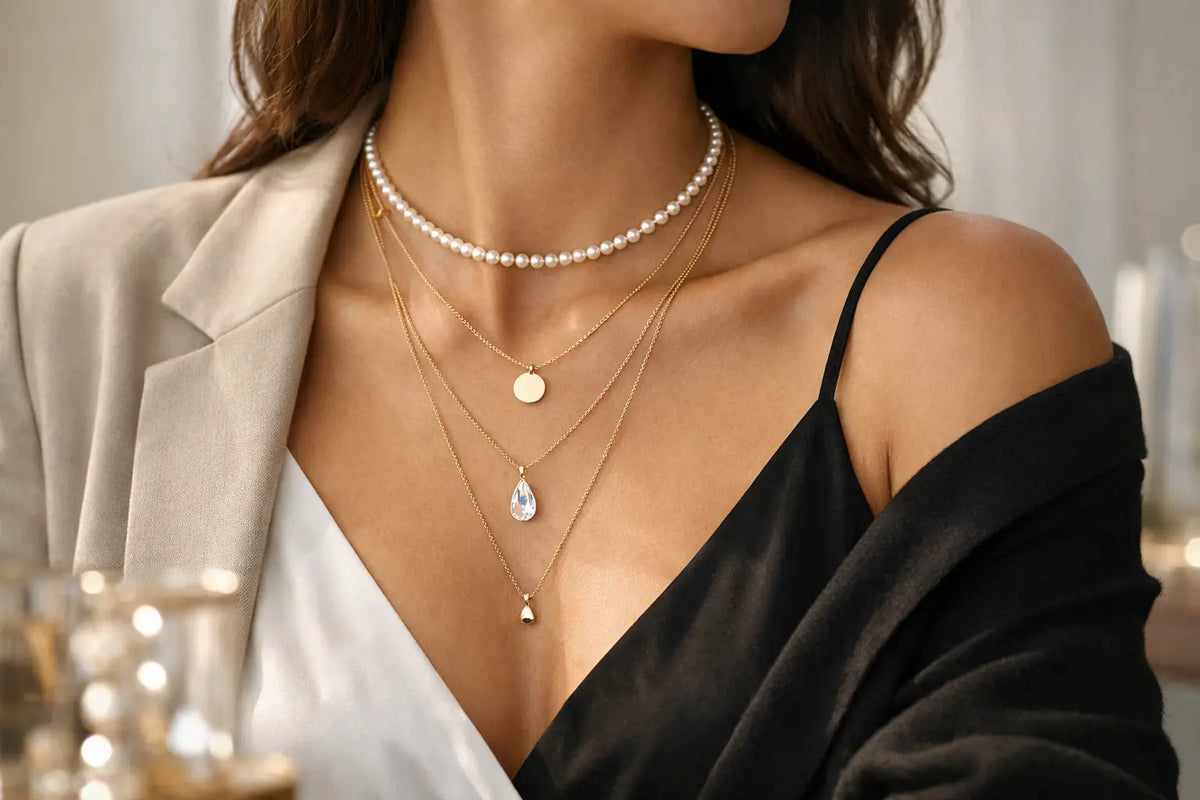
For a more expressive look, combine a delicate choker-length chain with a shorter pendant necklace and a longer, slender lariat. Keep the shapes clean. The V already creates drama, so a carefully selected diamond or gemstone focal point often has more impact than several competing charms.
Crew necks and high necks
Close necklines call for contrast. With a crew neck, a mid-length pendant that sits over the fabric gives the look definition, especially against a fine knit or crisp cotton. A shorter chain can work too, but it should sit fully above the neckline rather than awkwardly against its edge.
A roll neck offers a particularly refined setting for a longer chain, medallion or pendant. Add a second piece only if it has a clearly different length and weight. A gleaming 18ct gold chain layered with a diamond-set pendant can turn an otherwise minimal outfit into something quietly considered.
Scoop and round necklines
Scoop necks leave a generous open canvas, making them one of the most versatile options for layering. Echo the curve with a short chain, then introduce two descending lengths that remain within the exposed skin. A small pendant, signet-inspired charm or subtle diamond detail brings focus without interrupting the softness of the neckline.
The key is not to fill every inch of space. When the scoop is wide, the lowest necklace can sit near the upper chest, but the layers should still feel airy. Fine chains in varying links add dimension while preserving that sense of ease.
Square necklines
A square neckline is architectural, so choose necklaces that soften or intentionally complement its clean geometry. A short, rounded chain placed at the collarbone is an elegant starting point. Follow it with a small central pendant rather than a wide statement piece, which may compete with the straight lines of the bodice.
If the neckline is broad, two understated chains can look more polished than an elaborate stack. Consider mixing a smooth snake chain with a fine trace chain, allowing texture to do the work while the silhouette remains composed.
Strapless and off-the-shoulder styles
Bare shoulders create space for a more expressive arrangement. A close-fitting necklace paired with a longer pendant frames the collarbone beautifully, while a third layer can be introduced for evening wear. This is the moment for a more substantial chain or a diamond-set centrepiece, particularly when the rest of the look is clean-lined.
There is a trade-off, however. A voluminous necklace stack may distract from a dramatic sleeve, detailed corsetry or statement earrings. If the outfit already has strong visual interest, choose one exceptional necklace and let its craftsmanship carry the look.
Collared shirts
With an open shirt collar, layer necklaces in the revealed triangle of skin. A short chain and a fine pendant are often enough, with the pendant sitting just above the opening or within it. For a relaxed style, leave the first buttons undone and mix a polished gold chain with a meaningful charm.
Buttoned-up collars require a different approach. Wear a necklace over the shirt only if it has enough scale to be intentional, such as a longer pendant or a well-defined chain. Delicate pieces can disappear against the fabric and feel accidental rather than styled.
Build contrast through length, scale and texture
The most polished stacks use contrast with restraint. Length is the first consideration: allow a visible gap between each necklace so chains do not tangle or read as one dense line. A difference of a few centimetres is generally enough, though the ideal spacing depends on your height, neckline and the pendant size.
Next, vary the scale. Pair a whisper-fine chain with a slightly bolder link, or set a petite diamond pendant against an unadorned gold chain. Two statement pendants at similar lengths usually compete. If one piece holds sentimental value or features a striking stone, give it the lower position and let the shorter layer act as a quiet frame.
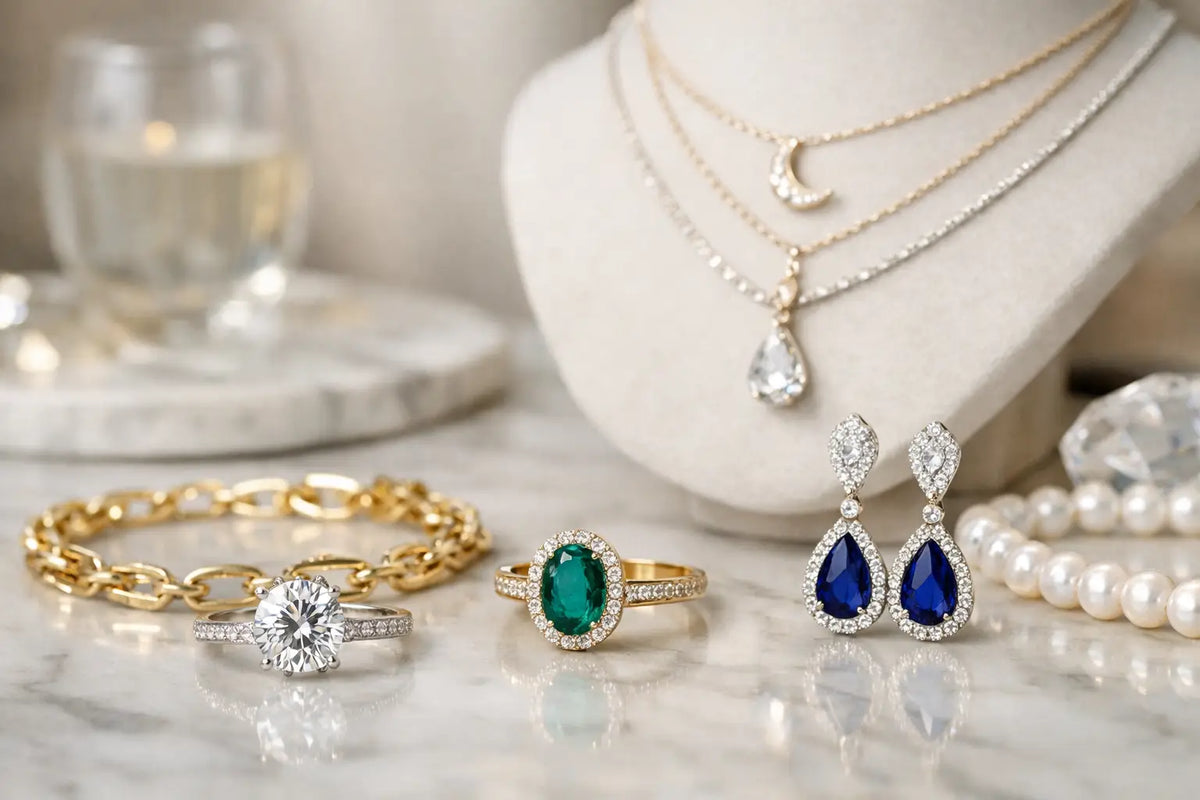
Texture adds another dimension. A polished curb chain, a delicate belcher chain and a smooth pendant chain each catch the light differently. Mixing them makes a layered look feel collected over time. The effect is still harmonious when the pieces share a common note, whether that is warm yellow gold, cool sterling silver, platinum tones or a repeated diamond detail.
Mixing metals with intention
Mixing metals can feel modern and personal, but it benefits from a connecting element. A two-tone pendant, diamond setting, watch or ring can visually unite yellow gold with white gold, platinum or silver. Without that bridge, the contrast can appear more accidental than expressive.
For an understated result, make one metal dominant and use the second as an accent. For example, two yellow gold chains can frame a white gold diamond pendant, or a silver necklace can sit alongside a fine gold charm necklace. The proportions matter more than strict rules. If the pieces suit your complexion, wardrobe and personal style, the combination is valid.
Let occasion influence the final layer
Daytime layering is often strongest when it is light and wearable. Two fine necklaces work with a T-shirt, shirt or cashmere knit without feeling overstyled. Select secure clasps and chains that are unlikely to catch on tailoring or scarves, especially if you wear them regularly.
For dinners, celebrations and formal events, a third layer or a more luminous centrepiece can add occasion. Consider the neckline alongside your earrings. Large drop earrings and a complex necklace stack can compete, whereas diamond studs or understated hoops leave room for the necklaces to take focus.
Bridal styling calls for particular care. The jewellery should support the gown rather than follow a trend that may date quickly in photographs. A single heirloom-inspired pendant with a fine collarbone chain can be more memorable than a crowded arrangement. For bespoke pieces and meaningful gemstones, Harper Kendall's jewellery concierge can help refine proportions around the exact neckline of your chosen outfit.
Keep layered necklaces looking considered
Comfort and movement matter as much as appearance. Chains that are too close in length will twist together, particularly when pendants have different weights. Choose adjustable chains where possible, and test the arrangement while walking, sitting and turning your head. The ideal layers remain distinct without constant adjustment.
Store fine chains separately to prevent tangling, and fasten them before placing them away. When wearing several pieces, begin with the shortest necklace, then add each longer layer. It is a small ritual, but it gives you the chance to notice whether the spacing, clasp position and pendant placement are exactly as they should be.
The most compelling necklace layers never look copied. They carry a sense of authorship: a chain chosen for its light, a pendant worn for its meaning, and a neckline that gives every piece room to shine. Start with the garment, trust proportion, and let your finest pieces become part of the way you tell your story.