
How to Select a Wedding Band Profile for You
The profile is the detail you feel long after the ceremony. It determines how a wedding band sits against your finger, catches the light and pairs with the rings you already wear. To select a wedding band profile well is to balance visual character with the quiet, everyday comfort that makes a ring feel completely your own.
A wedding band is often chosen for its metal, width or finish first. Each matters, but the cross-section of the ring is what gives it presence. A softly rounded band can feel traditional and effortless; a crisp flat profile feels architectural and modern. Neither is inherently better. The right choice is the one that reflects your style while working beautifully with your hand, lifestyle and engagement ring.
Why your wedding band profile matters
A band’s profile describes its shape when viewed from the side or cut through at the centre. It affects the ring’s height, the amount of metal against the skin and the way light moves across its surface. Two rings in the same width and metal can look distinctly different because one is gently domed while the other is square-edged or bevelled.
Comfort is equally central. A profile with softened inner edges may be especially appealing if you are not used to wearing rings, while a flatter style can offer a more precise, design-led look. The difference may seem subtle when a band is displayed on its own, yet it becomes apparent over a full day of typing, travelling, celebrating and living.
Profile also changes proportion. A wide, high-domed ring makes a confident statement, but may feel more substantial on shorter fingers. A low, slim profile can appear refined and discreet, although it may not deliver the same visual weight beside a large or elevated engagement ring. Thoughtful proportion is where a wedding band moves from simply beautiful to beautifully considered.
How to select a wedding band profile by style
Begin with the overall feeling you want your ring to convey. Your wardrobe, existing jewellery and engagement ring can offer more useful direction than trends alone.
Court profile: timelessly rounded
The traditional court profile is rounded on both the outside and inside. Its soft contours have an enduring, classic quality, making it a natural choice for those drawn to elegant jewellery with no sharp visual interruption. Because the inner surface is curved, it can feel smooth and forgiving on the finger.
A court band has pleasing presence even in a narrower width, as the dome catches light across the surface. It suits polished yellow gold, warm rose gold and luminous platinum particularly well. For a traditional wedding set, it remains a quietly assured choice.
D-shape profile: classic from the outside
A D-shape band is rounded on the exterior but flatter on the inside. From above, it gives the familiar curved appearance many associate with a traditional wedding ring. Against the finger, it can sit a little more directly than a full court band.
This profile is a strong option if you appreciate a classic silhouette but prefer a more defined construction. It works especially well in medium widths, where the curved exterior has enough room to show its form without overwhelming the hand.
Flat profile: clean and contemporary
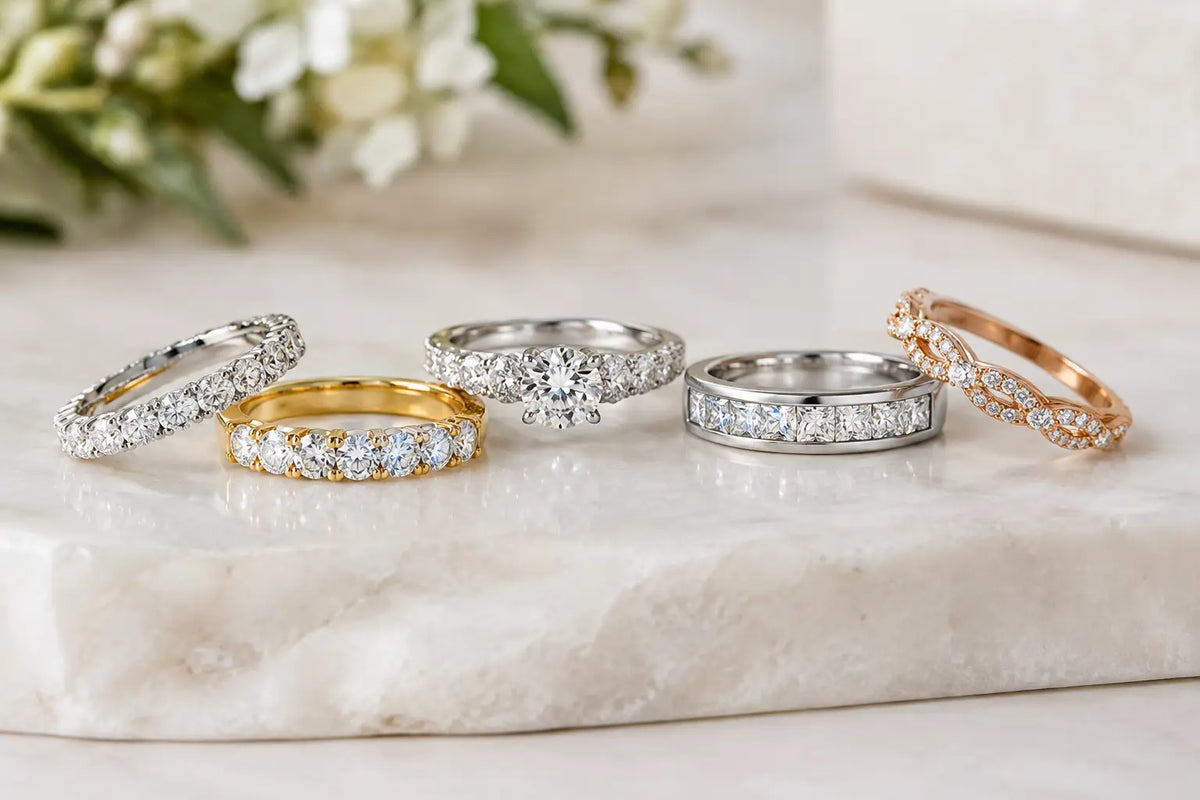
A flat wedding band has a level outer surface with clear edges. Its appeal lies in restraint: polished, precise and decidedly modern. In satin or brushed finishes, a flat profile takes on a more understated, tactile character, allowing the metal itself to become the focal point.
The trade-off is feel. Crisp-edged flat bands can be less forgiving than rounded designs, particularly in wider widths. A flat comfort-fit variation, with a softened interior, offers much of the same visual clarity while making daily wear more relaxed.
Flat court profile: the considered middle ground
Flat court bands combine a subtly rounded outer surface with a comfort-shaped interior. They are not as domed as a traditional court ring, nor as angular as a fully flat design. The result is refined and versatile - a profile with gentle light reflection and an easy, substantial feel.
For many couples, this is the profile that bridges timeless and contemporary taste. It pairs well with both plain engagement rings and diamond-set designs, particularly when the aim is a coordinated set that does not look overly matched.
Bevelled and knife-edge profiles: defined by light
Bevelled bands have angled edges that create a measured play of light across the metal. A knife-edge design rises towards a central ridge, creating a sharper, more sculptural line. Both profiles feel fashion-forward without relying on stones or intricate decoration.
They suit someone who prefers jewellery with structure and distinction. However, a pronounced ridge or sharp edge may not sit neatly beside every engagement ring. Try the two together, viewed from the side as well as from above, before committing to the final shape.
Let your engagement ring lead where it needs to
If you will wear your wedding band beside an engagement ring, the relationship between the two deserves careful attention. A low-set solitaire often allows a straight band to sit close. An engagement ring with a prominent setting, halo or wide gallery may leave a small gap unless the band is shaped to follow its contours.
A shaped wedding band can be made with a subtle curve, deeper wishbone or more tailored contour. This is not merely a practical adjustment. It can create an intentional negative space around the engagement ring, giving the pairing a distinctly personal silhouette. The most elegant set is not always the one that sits perfectly flush; it is the one that looks balanced from every angle.
Consider profile as well as shape. A highly domed band beside a delicate, low-profile engagement ring may appear visually heavier than intended. Conversely, a very slim flat band can disappear beside a statement centre stone. Bringing the proportions into harmony is more valuable than making every detail identical.
Width, depth and metal change the decision
Profile cannot be considered in isolation. Width is what you see from above, while depth is the amount of metal from the inner edge to the outer surface. A wider band generally needs enough depth to retain its shape and presence, but too much depth can make it feel cumbersome. A narrower band can be wonderfully delicate, though it should still have sufficient substance for a lifetime of wear.
Metal changes the visual result too. Yellow gold enhances rounded profiles with rich warmth, while platinum gives flat and bevelled profiles a crisp, cool clarity. Rose gold can soften a contemporary shape and bring romance to a slim court band. In 9ct or 18ct gold, the choice is often about the colour, richness and everyday feel you love most.
Diamond-set wedding bands introduce another consideration. A pavé or channel-set design benefits from a profile that protects the stones without making the ring feel unnecessarily high. If the band will be worn alone at times, a gently curved or flat court foundation can give diamond detailing a refined, finished appearance.
Choose for your hands and your routine
There are no rules about which profile belongs on a particular hand, but scale is useful. Longer fingers can carry broader or more sculptural bands with ease. Petite hands often suit narrower widths and lower profiles, although a bolder ring can be a compelling expression of personal style. The best test is to try different silhouettes, not simply different sizes.
Your daily routine matters as much as aesthetics. If you work with your hands, exercise regularly or prefer to forget you are wearing jewellery, a low-profile comfort-fit band may be ideal. If your wedding band is intended as a signature piece in its own right, a wider flat, bevelled or pronounced court profile may offer the impact you want.
Do not decide from a single glance in a mirror. Wear sample profiles for a few minutes, close your hand, hold a mobile phone and notice how the ring feels when your fingers naturally rest together. The right band should feel present, but never distracting.
A bespoke profile makes the ring unmistakably yours
A wedding band does not need to follow a standard formula. A bespoke approach allows you to adjust the width, depth, inner comfort fit, edge treatment and finish until every element feels resolved. You may choose a polished outer surface with a softly brushed inner detail, a fine engraved edge, or a profile designed precisely around an existing engagement ring.
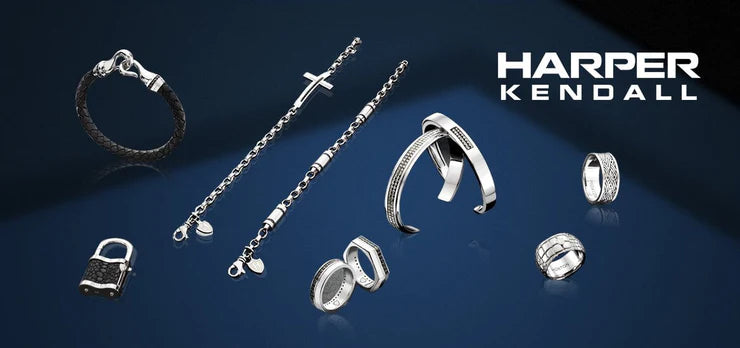
At Harper Kendall, a jewellery concierge can help translate a reference, a feeling or an engagement-ring measurement into a considered design. This is especially valuable when the perfect band is not quite straight, quite flat or quite traditional. Small adjustments can make an extraordinary difference to how the ring looks and feels.
Choose the profile that you keep returning to, even after trying everything else. The most lasting wedding band is not defined by convention, but by the confidence of knowing it belongs on your hand.