How to Choose Wedding Band Styles That Last
A wedding band is one of the few pieces of jewellery you are likely to wear every day, which is precisely why the decision deserves more than a quick glance at a tray of rings. If you are wondering how to choose wedding band styles that feel right now and still look elegant years from now, the answer sits at the meeting point of design, comfort and lasting craftsmanship.
How to choose wedding band with your lifestyle in mind
The most beautiful ring in the cabinet is not always the one you will enjoy wearing daily. A wedding band should suit the rhythm of your life as much as your aesthetic. If you work with your hands, visit the gym often or prefer jewellery that never feels fussy, a lower-profile design with a practical finish may be the wiser choice than a highly intricate diamond-set style.
That does not mean compromising on elegance. A polished court band in platinum can feel quietly luxurious and remarkably wearable, while a flat profile in 18ct gold offers a cleaner, more contemporary line. The right choice depends on how you live, what you already wear and whether you want your wedding band to make a subtle statement or hold its own as a design piece.
Comfort matters more than many people expect. A ring can be visually perfect and still feel wrong after a few hours. Rounded inner edges, balanced weight and the right width all shape how a band sits on the finger. This is where tried-on experience, rather than appearance alone, becomes invaluable.
Start with the metal
Metal is often the first major decision, and it affects more than colour. It influences durability, maintenance, feel and how your ring ages over time.
Platinum remains a favourite for wedding bands because it is naturally white, substantial in feel and exceptionally durable. It develops a soft patina with wear, which many people love for its understated character. If you prefer a pristine mirror finish at all times, you may need occasional professional polishing.
18ct gold offers richness and refinement, whether in yellow, white or rose. Yellow gold has enduring appeal and a warmer tone that flatters many skin tones. White gold can echo the bright look of platinum, although it may require re-plating over time to maintain its crisp white finish. Rose gold feels distinctly romantic and fashion-led, though it is best chosen because you truly love it rather than because it feels momentary.
For those balancing luxury with value, 9ct gold can be an excellent option. It offers the beauty of real gold with strong everyday practicality. The right metal is rarely about trend alone. It is about colour preference, wear habits and the level of maintenance you are comfortable with.
Matching the engagement ring - or not
For many brides, the next question is how the wedding band will sit beside the engagement ring. A perfectly matched set can look polished and intentional, especially if both rings share the same metal, profile and design language. Yet contrast can be just as beautiful when handled with confidence.
If your engagement ring is solitaire-led and classic, a simple plain band often creates the most elegant pairing. It allows the centre stone to remain the focal point while adding balance to the hand. If your engagement ring features a halo, pavé shoulders or a shaped setting, you may prefer a diamond-set band or a contoured design that follows its silhouette more closely.
There is, however, no rule that says the wedding band must disappear into the engagement ring. Some people prefer a distinct difference between the two - perhaps a sleek flat band beside a vintage-inspired ring, or a yellow gold band paired with a platinum engagement ring for a deliberately modern mix. The key is proportion. One ring should not visually overwhelm the other unless that contrast is intentional.
Width, profile and finish shape the look
Small design decisions make a surprising difference to the finished effect. Width is one of the most important. Narrow bands tend to feel delicate, refined and easy to stack, while wider bands carry more presence and often suit those who want the wedding band to stand alone beautifully.
Profile matters just as much. Court bands are softly rounded and timeless, making them a natural choice for everyday comfort. D-shaped bands have a traditional exterior curve with a flatter interior feel. Flat court and flat bands appear more contemporary, with cleaner edges and a stronger design statement.
Then there is finish. Highly polished bands feel formal and classic. Matt or satin finishes offer a quieter, more modern elegance, though they may show signs of wear differently. Textured finishes can add individuality, but they should be chosen carefully. Detail is most successful when it feels considered rather than decorative for its own sake.
Should you choose diamonds?
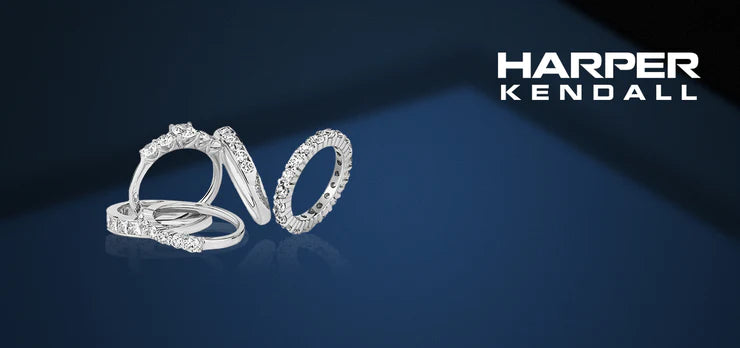
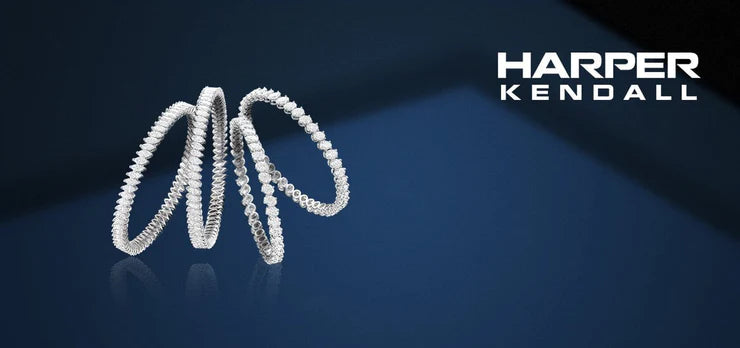
A diamond-set wedding band can add brilliance, softness and a more elevated layered look, particularly when worn beside an engagement ring. It can also stand alone beautifully if you prefer one ring on certain days. Eternity-style bands, half-eternity rings and subtle pavé settings each create a different mood.
The practical question is whether sparkle suits your everyday life. A plain band is often the lowest-maintenance option and has an enduring purity to it. A diamond-set band brings more visual interest, but it may require more attention over time, especially if the setting is fine or intricate.
This is where personal style should lead. If you wear diamond jewellery daily and love light-catching detail, a stone-set band may feel entirely natural. If your wardrobe leans towards tailored simplicity, a plain precious metal band might feel far more sophisticated. Neither is the better option universally. The better option is the one that still feels like you once the wedding day styling has passed.
How to choose wedding band for long-term wear
When considering how to choose wedding band designs for the long term, think beyond the ceremony. Your ring should work with your wardrobe, your other jewellery and the way your style may evolve. Pieces that endure tend to have clarity in their design. They are distinctive, but not overworked.
Ask yourself whether you want a band that blends effortlessly into your existing jewellery collection or one that marks a clear new chapter. Some people want timeless understatement. Others want a ring that feels unmistakably personal, perhaps through mixed metals, engraving or a bespoke profile.
Bespoke design can be especially valuable when standard options do not quite meet the moment. If your engagement ring has an unusual shape, or if you want to incorporate a meaningful detail, a custom approach allows the band to be crafted around your life and taste rather than adapted from a display case. That level of consideration often shows in the final piece.
Don’t overlook practical details
Sizing deserves proper attention. Fingers can change slightly with temperature, time of day and season, so a rushed fitting rarely gives the most reliable result. A wedding band should slide on with ease and offer gentle resistance when removed, feeling secure without becoming restrictive.
Hallmarking, metal purity and craftsmanship are equally important. A wedding band is a sentimental purchase, but it is also a fine jewellery investment. You should know exactly what metal you are choosing, how it is finished and how it will be cared for over time.
It is also worth thinking about how you plan to wear the ring in future. Will it sit next to an eternity ring one day? Do you want the option to wear it alone? Are you choosing matching bands as a couple, or selecting styles independently? These questions sound small, but they help shape a choice that feels considered rather than merely attractive in the moment.
Trust your eye, but trust the wearability too
The most successful wedding bands strike a balance between emotion and judgement. You should feel something when you put it on. There should be a sense of recognition, as though the piece belongs to you already. But that feeling should be supported by practical confidence in the metal, fit and finish.
At Harper Kendall, that balance between artistry and wearability sits at the heart of fine jewellery selection. A wedding band should not only photograph beautifully on the day. It should feel refined on an ordinary Tuesday, after years of wear, when the meaning has deepened and the design still feels entirely your own.
Choose the ring that meets your life with elegance, not just the one that meets the occasion. That is usually where lasting style begins.