
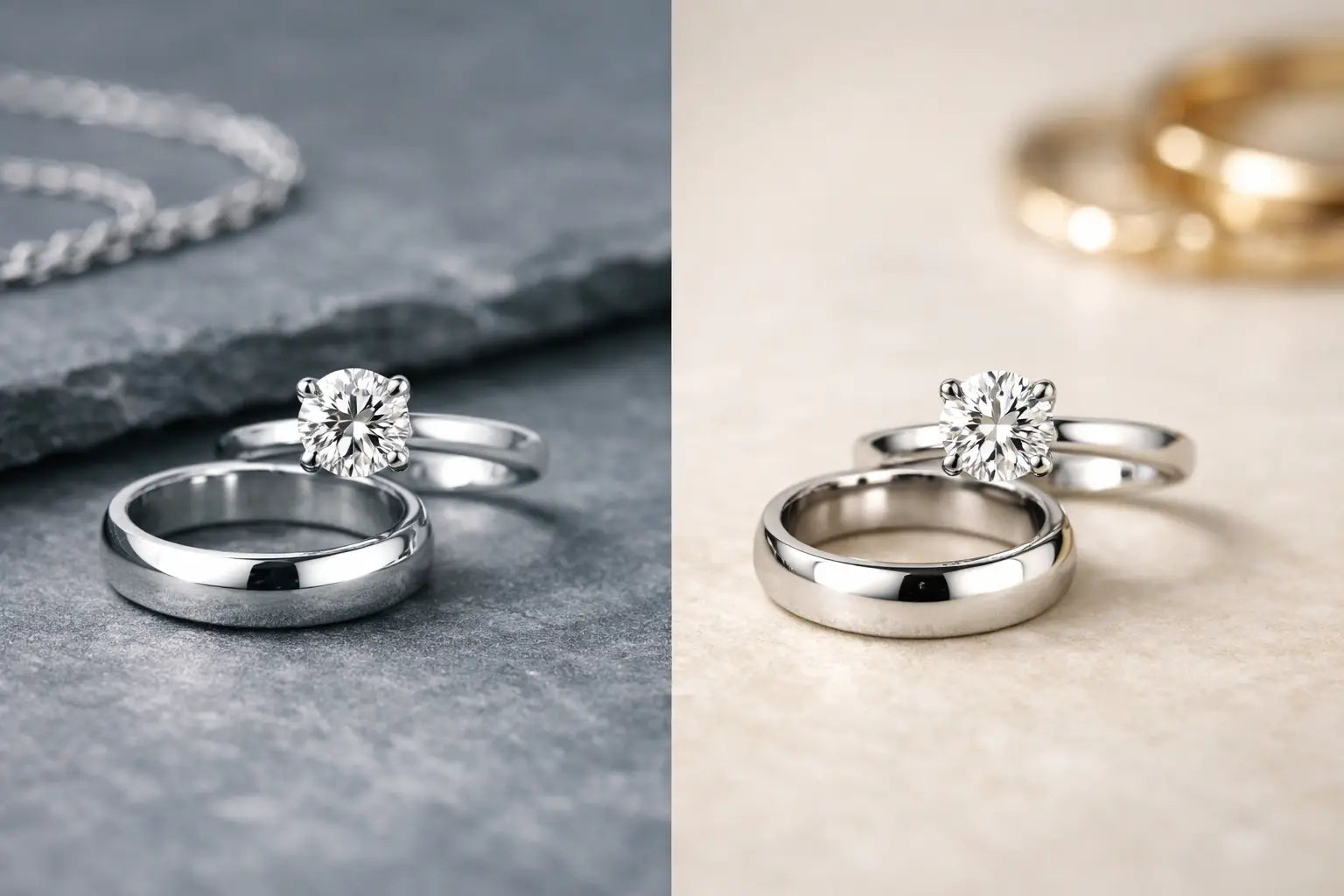
Sterling Silver vs White Gold: Which Suits You?
A white metal ring can look quietly perfect in the box, then feel completely different once it is part of your everyday wardrobe. That is why sterling silver vs white gold is not simply a question of appearance. It is a decision about how you wear jewellery, how often you reach for it, and whether you want a piece that feels fashion-led, heirloom-worthy, or somewhere beautifully in between.
For some, sterling silver offers a crisp, bright finish and effortless versatility. For others, white gold brings a richer fine jewellery feel, with greater longevity for pieces intended to mark an engagement, anniversary or personal milestone. Both have their place. The right choice depends on the role the piece will play in your collection.
Sterling silver vs white gold at a glance
At first look, sterling silver and white gold can appear remarkably similar. Both sit in the cool-toned family and pair elegantly with diamonds, pearls and coloured gemstones. Both work beautifully with modern styling and classic silhouettes alike.
The difference lies beneath the surface. Sterling silver is an alloy made from 92.5% pure silver, blended with other metals for strength. White gold is yellow gold mixed with white metals to change its natural tone, then often finished with rhodium plating for a bright white appearance. In practical terms, white gold is considered the more premium fine jewellery option, while sterling silver is often chosen for accessible luxury and everyday style.
Colour and finish
If your priority is colour, the distinction is subtle but worth understanding. Sterling silver tends to have a naturally bright, slightly softer white tone. It can look fresh, luminous and understated, particularly in minimalist designs or pieces with a polished finish.
White gold usually presents a more refined, high jewellery look. Rhodium plating gives it a crisp, brilliant whiteness that many clients associate with engagement rings, wedding bands and diamond jewellery. That finish can appear slightly cooler and more mirror-like than silver.
This does not mean one is more beautiful than the other. It means the mood is different. Sterling silver feels easy, modern and wearable. White gold feels elevated, enduring and distinctly luxurious.
Durability for everyday wear
When jewellery is designed to be lived in, durability matters as much as style. This is where white gold often takes the lead.
Sterling silver is relatively soft compared with gold alloys. It is perfectly suitable for earrings, pendants, bracelets and occasion rings, but it can pick up scratches, marks and slight misshaping more readily over time, particularly in pieces worn daily or exposed to knocks. A silver ring worn every day will usually show wear sooner than the same design crafted in white gold.
White gold is generally stronger and better suited to long-term daily wear, especially for rings. If you are choosing a setting for diamonds or gemstones, or investing in a piece you expect to wear for many years, white gold offers reassuring structure and resilience.
That said, durability is not only about the metal itself. Design plays a role too. A delicate chain, slim band or intricate setting will always need thoughtful wear, whatever the metal.
Best for rings and milestone pieces
For engagement rings, wedding bands and jewellery with significant sentimental value, white gold is often the more natural choice. It has the fine jewellery presence and lasting strength that suit pieces intended to become part of your story.
Sterling silver remains a wonderful option for fashion rings, statement earrings, layering necklaces and gifting. It allows for elegant design without committing to a higher-value metal for pieces that may be more trend-led or occasional.
Maintenance and care
Every precious metal asks for some level of care. The difference is in what that care looks like.
Sterling silver is known for tarnishing. This is entirely normal. Exposure to air, moisture, skincare and everyday life can cause the surface to darken over time. The good news is that tarnish is usually easy to remove with proper cleaning, and regular wear can even help keep silver brighter.
White gold does not tarnish in the same way, but it does require maintenance of its own. Because many white gold pieces are rhodium plated, that plating will gradually wear with time, especially on rings. When this happens, the metal may begin to show a slightly warmer tone underneath. Replating restores that bright white finish.
So the care question is not which metal is maintenance-free, because neither is. It is which type of upkeep better suits your habits. If you do not mind polishing and occasional cleaning, sterling silver is straightforward. If you prefer a more enduring structure with periodic professional refinishing, white gold may be the better fit.
Value, investment and how the piece will be worn
There is also the matter of value. Sterling silver is the more accessible option, making it ideal for building a versatile jewellery wardrobe. It lends itself beautifully to stacking, layering and experimenting with different silhouettes. If you love changing your look and curating jewellery around mood and outfit, silver offers freedom.
White gold sits higher in the fine jewellery hierarchy. It is more expensive because it contains gold and is often selected for pieces with greater permanence. That does not automatically make it a financial investment in the strictest sense, but it does make it a stronger choice for jewellery you want to keep, restore and treasure over time.
Think about intention. If you are buying a necklace to wear through one season and beyond, sterling silver may be exactly right. If you are choosing a diamond ring to mark a chapter in life, white gold carries the gravitas many clients want.
Which metal suits your style?
Style is often the deciding factor, and rightly so. Jewellery should feel personal.
Sterling silver suits a clean, contemporary aesthetic. It works beautifully with tailored dressing, monochrome palettes and layered looks that feel modern rather than formal. It can also be wonderfully relaxed on the skin, making it a favourite for everyday pieces that move from office to evening with ease.
White gold has a more elevated presence. It complements diamond jewellery especially well and feels at home in refined, polished wardrobes. If you gravitate towards timeless silhouettes, occasion dressing or pieces with future heirloom appeal, white gold may feel more aligned with your taste.
Skin tone and metal pairing
Both metals flatter cooler colour palettes, but the choice is rarely dictated by skin tone alone. Many people wear both with ease. What tends to matter more is how the metal works with the rest of your jewellery.
If your collection already includes platinum, white gold or cool-toned watches, white gold integrates naturally. If you prefer a mix of fashion jewellery and fine pieces, sterling silver can offer that bright white look in a flexible, easy-to-style way.
When sterling silver is the smarter choice
Sterling silver is especially appealing when you want design impact with everyday practicality. It is ideal for trend-conscious styling, generous gifting, and building a layered collection without limiting yourself to a single hero piece. It is also excellent for earrings, pendants and bracelets that do not face the same daily pressure as rings.
For many clients, silver is less about compromise and more about purpose. It gives you elegance, versatility and a beautiful white finish in a metal that feels easy to wear.
When white gold is worth it
White gold comes into its own when the jewellery carries emotional or long-term significance. It is often the right choice for bridal, diamond-set rings, milestone gifts and signature pieces you expect to wear repeatedly for years.
If you want a white metal with a more luxurious fine jewellery identity, white gold justifies its place. It has substance, prestige and a lasting quality that suits personal treasures.
The right choice depends on the moment
There is no universal winner in sterling silver vs white gold, only a better match for the piece you have in mind. A silver necklace for effortless daily wear and a white gold ring for a once-in-a-lifetime occasion can both be the right answer.
The most considered jewellery collections are rarely built from one metal alone. They are shaped by lifestyle, sentiment and design instinct. If you choose with those in mind, the piece will not simply look right on day one. It will continue to feel right every time you put it on.