How to Choose Pendant Length
A pendant can look beautifully considered or slightly off, and the difference is often just a few centimetres. If you are wondering how to choose pendant length, the answer is less about rules and more about proportion - between the pendant, the chain, your neckline and the way you want the piece to feel when worn.
The right length gives a pendant presence. It lets a diamond solitaire sit neatly at the collarbone, allows a symbolic charm to layer without clutter, or gives a longer design the elegant drop it needs. A poorly chosen length can make even a finely crafted pendant feel awkward, disappearing into clothing or sitting too high to flatter the shape of the piece.
How to Choose Pendant Length for Everyday Wear
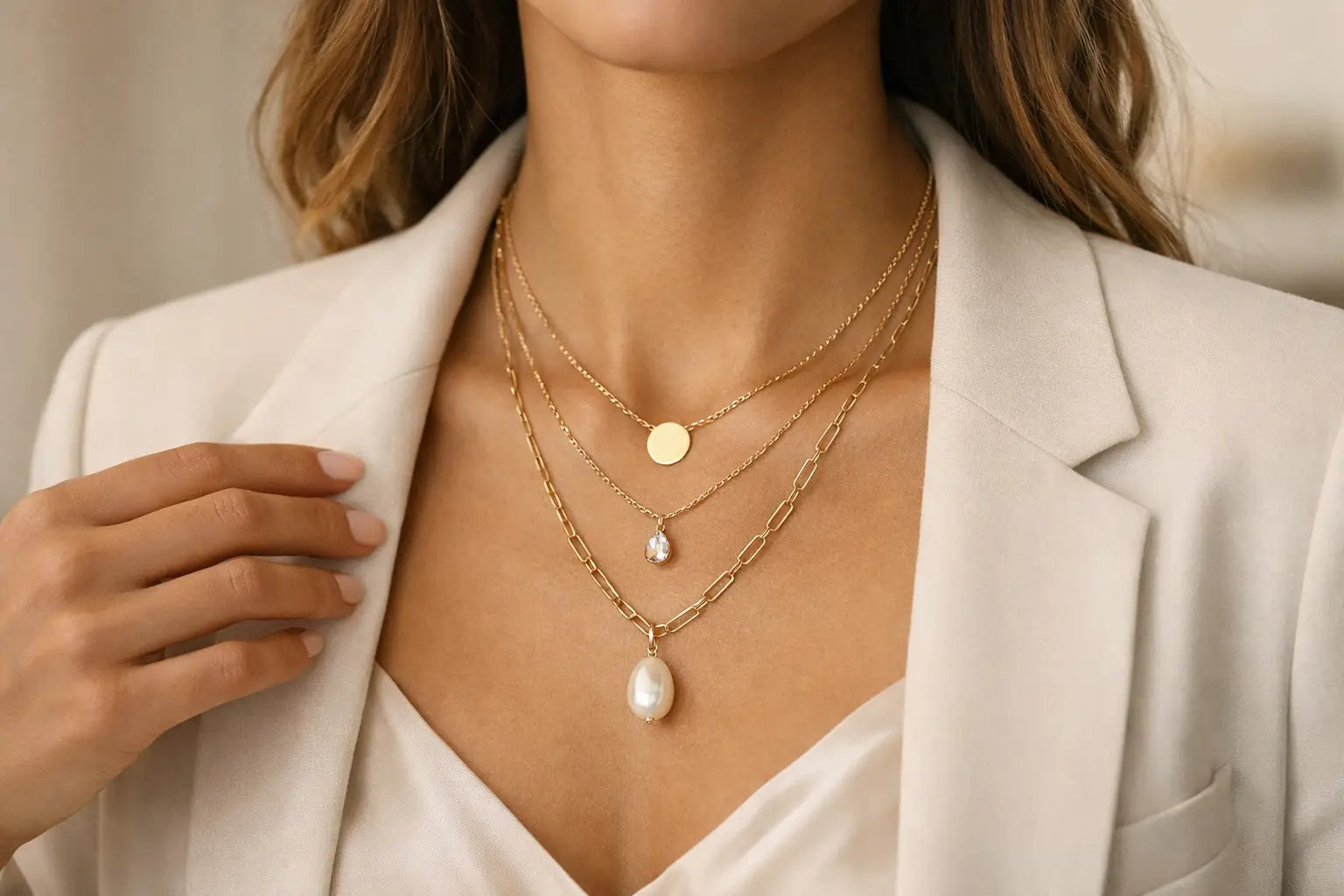
For most people, pendant length starts with one simple question: where do you want the focal point to sit? That matters more than the number on the clasp. A fine pendant worn daily often looks most balanced when it sits at or just below the collarbone, creating a refined line that feels natural with both open necklines and tailored clothing.
Shorter lengths tend to feel polished and versatile. They frame the face, work well with smaller pendants and bring a certain neatness to everyday styling. This is often the right choice for delicate initials, minimalist diamonds and sentimental pieces you rarely remove.
Slightly longer lengths create a softer, more relaxed effect. They can flatter elongated pendants, drop motifs or bolder gemstone designs that need a little space to be appreciated. If your wardrobe leans towards knits, high necks or layered dressing, a pendant that sits lower on the chest may feel easier to wear.
The most useful approach is to think visually rather than technically. Instead of asking which length is standard, ask which position best suits the design. A tiny pendant can be lost if it drops too low. A larger piece may feel crowded if it sits too close to the throat.
The Main Factors That Affect Pendant Length
Neckline is the first consideration, because jewellery never exists in isolation. A pendant should feel in conversation with what you are wearing. Open collars, scoop necks and V-necks usually suit pendants that sit within the frame of the neckline. Crew necks and high necks often benefit from a slightly longer drop so the pendant sits clearly below the fabric rather than fighting with it.
Your proportions matter too, though not in a restrictive way. A shorter neck may suit a pendant that drops a little lower, as this can create visual length. A longer neck often carries shorter, collarbone-skimming styles beautifully. This is not a rulebook. It is simply about balance.
Pendant scale is another important detail. Fine, understated motifs usually pair well with shorter chains because the delicacy remains visible. Heavier pendants, statement symbols and gemstone-set designs often need a little more drop to hang correctly and feel proportionate.
Personal style should lead the final decision. Some people want jewellery that feels discreet and close to the body. Others prefer a pendant that reads as a styling feature. Neither is more correct. The right length is the one that matches how you dress and how you want the piece to be noticed.
How to Choose Pendant Length for Different Pendant Styles
A classic solitaire or small charm is usually most elegant on a shorter chain. This keeps the design close enough to catch the light and remain part of your everyday look, rather than disappearing into the outfit.
Symbolic pendants such as crosses, stars, zodiac motifs or initials often have more flexibility. They can sit neatly at the collarbone for a refined finish or slightly lower if you want a more contemporary, layered look. Their success depends on their size and the weight of the chain.
Longer vertical pendants, bars and drops often look better with more breathing room. If they sit too high, the proportions can feel compressed. A little extra length allows the shape to read clearly and move naturally.
Statement pendants require the most judgement. A substantial design in gold, silver or platinum needs enough space to hang well, but not so much that it feels disconnected from the rest of your look. In this case, chain thickness and pendant weight become part of the same decision. The stronger the visual presence of the pendant, the more considered the length needs to be.
Layering Changes the Answer
If you plan to wear your pendant alone, the choice is fairly straightforward. If you want to layer it, length becomes more strategic. The goal is separation, not competition.
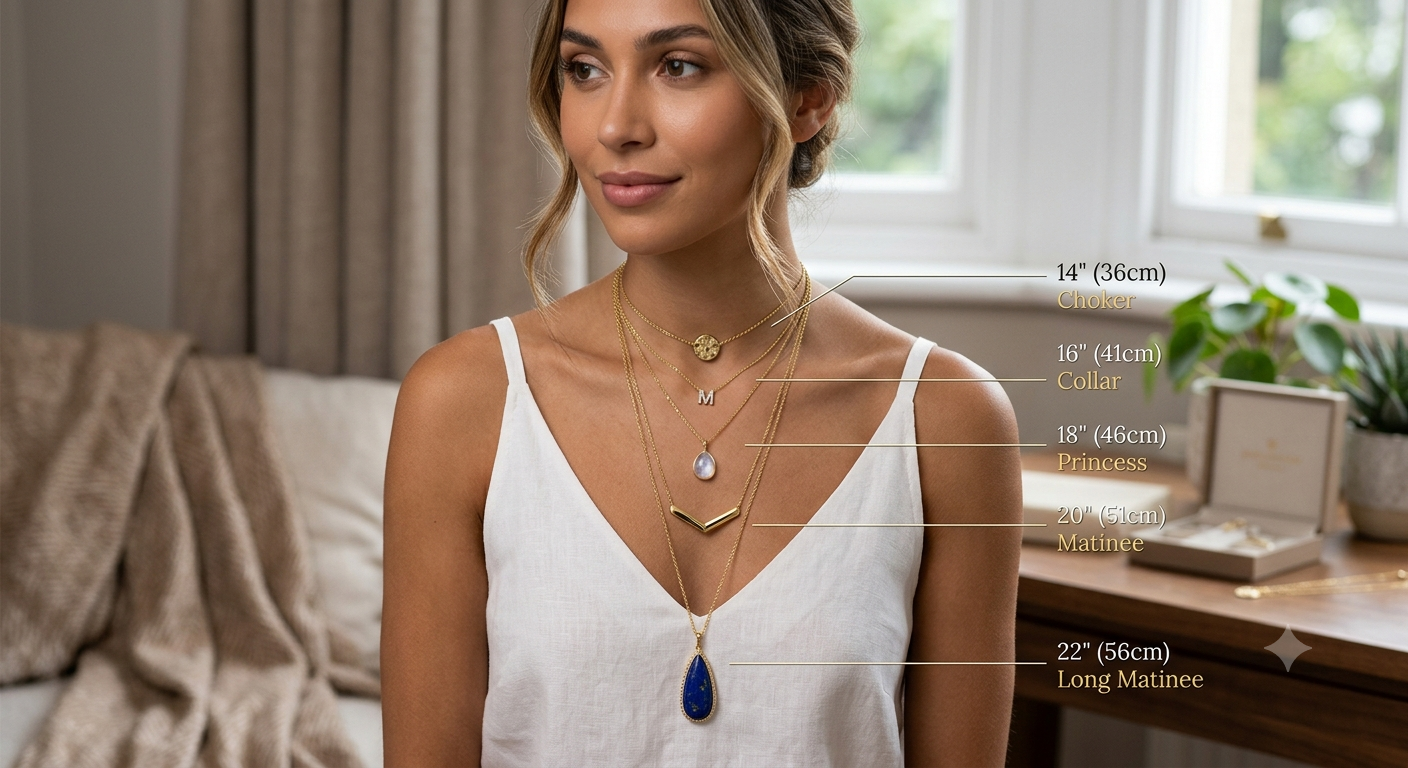
A pendant usually works best in a layered look when it occupies its own visual level. If every necklace sits within a centimetre of the next, the effect can feel tangled rather than intentional. A shorter plain chain above a pendant creates a clean frame, while a longer chain below can add depth and contrast.
This is where pendant size matters again. A fine pendant layers easily because it does not dominate the line-up. A larger pendant often needs to be the hero piece, with quieter supporting chains around it. Trying to layer several focal designs at similar lengths can make the overall effect feel busy, even if each piece is beautiful on its own.
For a more elegant result, keep one element distinct. That might be the pendant itself, the chain texture or the lowest point of the stack.
Practical Fit Matters as Much as Style
There is a romantic side to jewellery, but fit is still practical. A pendant that catches on clothing, twists constantly or sits awkwardly during daily wear will not feel luxurious for long.
Consider your routine. If you wear collared shirts for work, a pendant that sits exactly where the collar closes may become irritating. If you favour knitwear, a very short pendant may disappear more often than you would like. If the piece is for everyday wear, comfort and ease deserve as much attention as appearance.
Hair length can make a difference too. Very fine chains worn at shorter lengths may catch in longer hair more easily, while heavier pendants need enough stability to remain facing forwards. These details sound small, but they shape whether a necklace becomes part of your wardrobe or stays in its box.
How to Choose Pendant Length as a Gift
Choosing a pendant as a gift adds another layer of thought, because you are selecting not only the design but also how it will be worn. If you are unsure, a length that sits around the collarbone is often the most versatile and widely flattering. It feels classic, elegant and easy to style.
That said, the recipient’s wardrobe offers useful clues. Someone who wears open necklines, silk shirts and fine layering pieces may prefer a shorter, more delicate position. Someone with a more fashion-led or relaxed style may enjoy a slightly longer pendant with more presence.
If the pendant has emotional significance - an initial, birthstone, faith symbol or milestone gift - a closer fit often feels more intimate. If it is chosen as a statement piece, a little extra drop can make the design more expressive.
When gifting fine jewellery, subtle versatility is rarely a mistake. A beautifully made pendant in a balanced length has a way of becoming part of someone’s signature style.
When Bespoke Design Changes the Proportions
Custom jewellery allows for a more precise answer to how to choose pendant length because the chain and pendant can be considered together from the beginning. This is especially valuable for heirloom-inspired pieces, diamond pendants and one-of-a-kind designs where scale, setting and movement are integral to the final effect.
A bespoke pendant can be designed with its intended position in mind. That means the size of the motif, the weight distribution and the chain length all support the same outcome. Rather than choosing a pendant first and adapting later, the piece is composed as a whole.
For clients seeking something more personal, that level of refinement can make all the difference. It turns the necklace from a beautiful object into a beautifully resolved one.
The most flattering pendant length is rarely chosen by habit. It is chosen by eye, by proportion and by the life the piece is meant to have. When those elements align, the necklace does more than sit well - it feels entirely your own.