





How to Clean Platinum Jewellery Safely at Home
Platinum has a quiet confidence. Its naturally white finish, satisfying weight and exceptional durability make it a beautiful choice for pieces worn every day, from wedding bands to diamond-set rings. Knowing how to clean platinum jewellery correctly will preserve that refined appearance without disturbing delicate settings, precious stones or the character the metal develops over time.
Unlike plated white metals, platinum does not rely on a surface coating for its colour. It is naturally white throughout, which means a small mark will not reveal a different shade beneath. Still, daily life leaves its trace: hand cream, soap, fragrance and natural skin oils can soften platinum’s lustre and dull a gemstone’s brilliance. A gentle, regular routine is all it takes to restore its polished presence.
Why platinum needs a considered approach
Platinum is dense, precious and remarkably resilient, but resilient does not mean invulnerable. Over years of wear, polished platinum can develop a soft satin-like patina. Many people value this subtle finish as part of the metal’s individuality, particularly on wedding rings and bespoke pieces designed to become part of a life story.
Cleaning removes surface residue, not the patina itself. If you prefer a mirror-bright finish, professional polishing can refresh the surface. This should be approached thoughtfully, however, as any polishing removes a minute amount of metal. Platinum is enduring enough for occasional refinishing, but it is rarely necessary to pursue a newly polished look after every small scratch.
The metal is only one part of the equation. A plain platinum band can tolerate a simple at-home clean with confidence, while an antique-style ring, pavé diamond design or piece set with softer gemstones requires a lighter touch. The setting, age and craftsmanship of your jewellery should guide your method.
How to clean platinum jewellery with soap and water
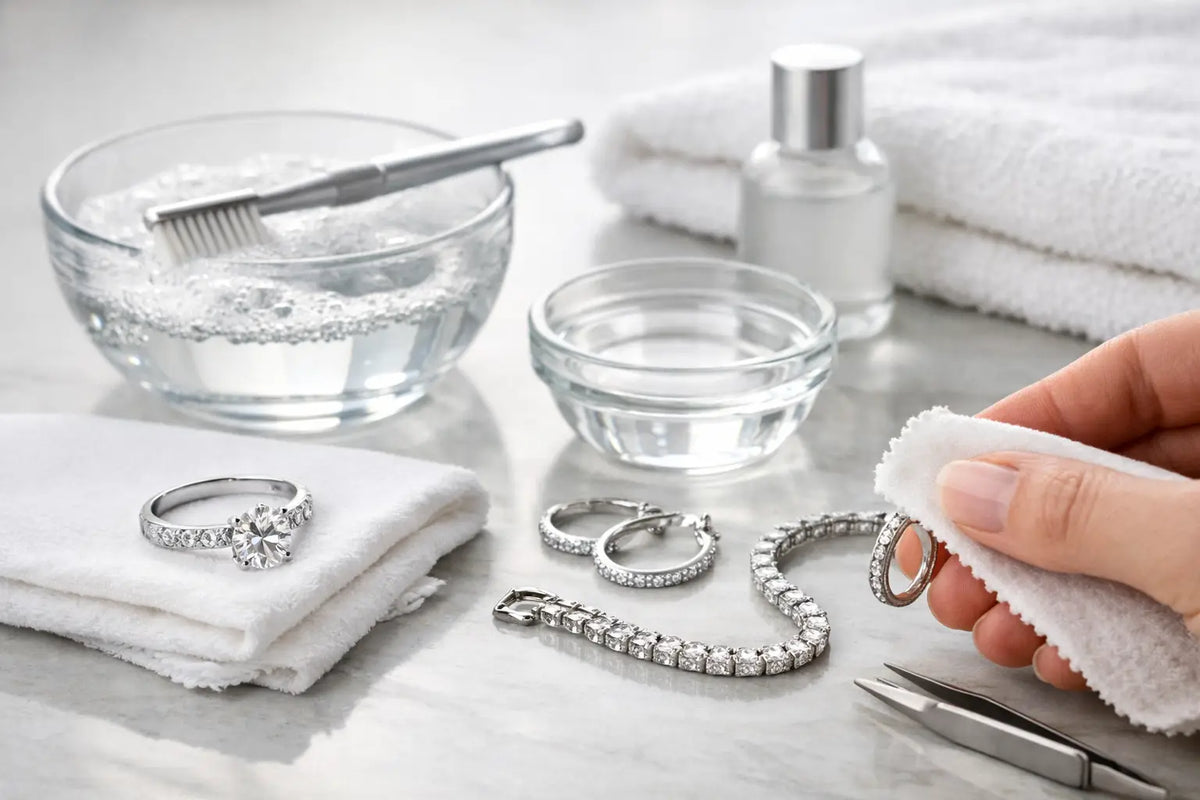
For most solid platinum jewellery, the safest method is also the simplest. Use warm water, a small amount of mild washing-up liquid and a very soft toothbrush reserved solely for jewellery.
Begin by filling a small bowl with warm, not hot, water. Add a few drops of mild liquid soap, then place your platinum jewellery in the solution for around 10 to 15 minutes. This loosens everyday build-up without the need for harsh rubbing.
After soaking, use the soft brush with a light hand to clean behind a ring’s setting, around the gallery, beneath a pendant bail and between links in a chain. These are the areas where lotion and soap residue tend to settle. Let the bristles do the work rather than applying pressure, especially around claws holding diamonds or gemstones.
Rinse thoroughly in a second bowl of clean lukewarm water. Avoid rinsing directly over an open sink, where a small earring or ring could easily disappear. Pat dry with a clean, lint-free cloth, then leave the piece on a soft cloth until fully dry before storing it away. Moisture caught beneath a setting is unlikely to damage platinum itself, but careful drying is a good habit for any fine jewellery.
Cleaning diamond-set platinum pieces
Diamonds are exceptionally hard, yet they are magnets for oil. A diamond ring can look less radiant simply because a fine layer of hand cream has settled beneath the stone. The mild soap-and-water method is ideal for most diamond-set platinum jewellery and can bring back noticeable fire and sparkle.
Take particular care with pavé, halo and micro-set designs. Their smaller stones are held in place by fine beads or claws, so avoid vigorous brushing. Instead, softly brush around the underside of the setting, rinse carefully and inspect the piece afterwards. If you notice a stone moving, hear a faint rattle or catch a claw on fabric, stop wearing the piece until a jeweller has checked it.
Gemstones that need extra care
Not every gemstone should be soaked. Pearls, opals, emeralds, turquoise, coral and many antique stones can be sensitive to moisture, heat, chemicals or changes in temperature. Some emeralds are routinely treated with oils or resins, which can be affected by cleaning solutions.
For platinum jewellery set with these materials, use a barely damp, soft cloth to wipe the platinum areas and avoid immersing the piece. If you are unsure whether a stone has been treated, or whether its setting is secure, professional advice is the most elegant choice. Fine jewellery deserves care that respects both its materials and its making.
What not to use on platinum jewellery
Platinum does not need aggressive products to look its best. Household cleaners, bleach, chlorine, toothpaste and abrasive powders are best avoided. They can leave residue, scratch a polished finish or cause unnecessary risk to gemstone settings.
Ultrasonic cleaners can be useful for certain plain platinum and diamond pieces, but they are not a universal solution. The vibrations may loosen stones in worn or delicate settings, and they are unsuitable for many treated, porous or fracture-filled gemstones. A professional ultrasonic clean is preferable when the piece has first been inspected for loose stones and worn claws.
Jewellery dips should also be used with restraint. They may promise instant brightness, but their chemical action is unnecessary for routine platinum care. A calm soak in mild soap and water is gentler, more dependable and better suited to treasured pieces worn for years.
How often should platinum jewellery be cleaned?
The right frequency depends on how you wear it. An engagement ring worn every day may benefit from a gentle clean every one to two weeks, particularly if you use hand cream, cook often or lead an active lifestyle. Earrings and occasion jewellery may only need attention before wearing.
A quick wipe with a soft cloth after wear can make a real difference. It removes fingerprints and surface oils before they have a chance to build up. For chains, bracelets and pieces with more intricate detail, a monthly clean is usually sufficient unless they are worn daily.
There is also a practical distinction between cleaning and checking. Diamond-set platinum rings should be professionally inspected at intervals, particularly if they are worn every day. A jeweller can assess claws, settings and the general condition of the piece, helping to identify small issues before they become a lost stone or damaged setting.
Everyday habits that protect platinum’s beauty
Good care begins before cleaning is needed. Remove platinum rings before gardening, gym sessions, DIY projects and any task involving heavy tools. Platinum is strong, but a sharp impact can distort a setting or bend a claw. Take jewellery off before swimming too, as chlorine is not kind to fine jewellery settings over time.
Apply perfume, hairspray, body lotion and make-up before putting on your jewellery. This simple order of dressing reduces film on the metal and stones. When travelling, keep each piece in its own soft pouch or compartment. Platinum can withstand a great deal, but diamonds can scratch other jewellery and chains can tangle when stored together.
For pieces with deep personal meaning, such as a wedding band made to mark a promise or a bespoke pendant created for a milestone, consider keeping a small care routine alongside your usual wardrobe rituals. A soft cloth, a safe storage place and an occasional professional inspection are modest gestures that protect an object designed to last generations.
Platinum jewellery is made for living in, not hiding away. Treat it gently, clean it with patience and let its evolving finish reflect the moments that made it yours.